Fresh & grassy
Start with a leaf described as vegetal, floral, or bright when you want a lighter cup.
Not one flavor, one temperature, or one ritual. A visual guide to choosing a leaf, brewing it gently, and using it well.

Start with a leaf described as vegetal, floral, or bright when you want a lighter cup.
Look for a clearly named roasted style when you want a warmer, more savory direction.
Choose a format and method that fit the job: concentrated hot brew, cold brew, or a recipe built for tea.
These are practical starting points, not universal laws. Pick a style below to see why green tea often benefits from water below a rolling boil and a short first steep.
Everyday sencha
Taste at one minute. Cool freshly boiled water first rather than pouring at a rolling boil.
Green tea can bring a light, aromatic note to food and cold drinks. The point is to support the recipe, not bury the leaf under heavy spice.

Cold brew beside the lunchbox. A travel mug on a work break. A cup made after the dishes. The useful ritual is the one that meets real life.
Leaf & Larder AI-generated editorial illustration · Everyday home use · v1Brew, cool, and pair with citrus or fruit. Taste before sweetening.
Replace part of a recipe’s liquid with brewed green tea when it calls for a light tea note.
Steep leaf briefly in hot simple syrup, strain, cool, and use in cold drinks or fruit desserts.
Use comparisons to choose the right direction—not to pretend all tea styles are the same.
Often gentler and more delicate, but it is not the same processing category as green tea.
Can bring floral complexity and more body when that is the goal.
A powdered green tea format, not a substitute for every loose-leaf brewing task.
What actually works instead, how long it really keeps, and what to serve it with.
People often arrive looking for a tea for sleep, digestion, weight, cholesterol, or long-term health. Those are legitimate questions. But a search question is not proof that one tea will produce a result.
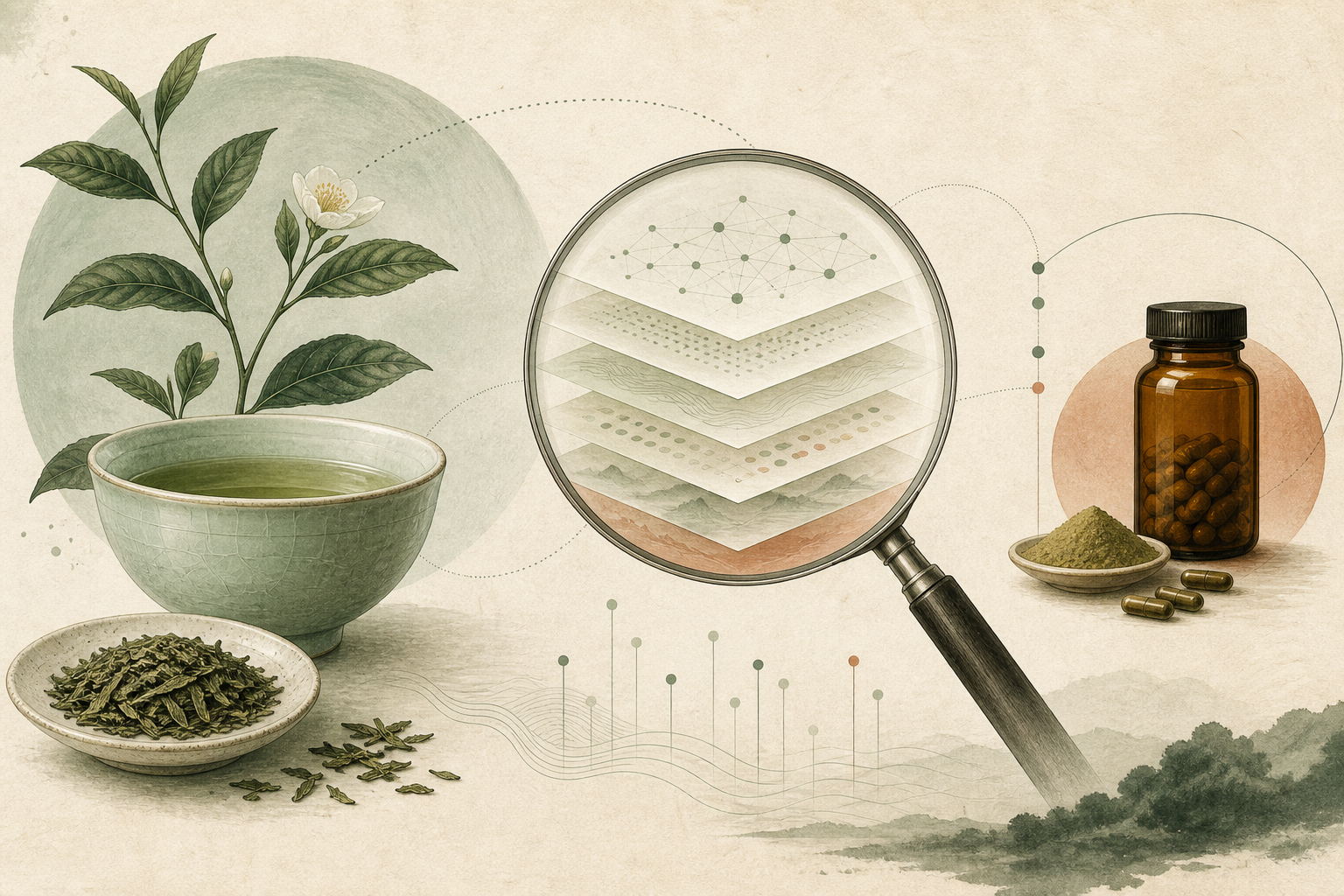
The National Center for Complementary and Integrative Health says definite conclusions cannot yet be reached for most purposes for which green tea is used. Cancer findings have been inconsistent; many cholesterol studies evaluated extracts rather than brewed tea.
Last reviewed: · Version 3.0
This guide is maintained as editorial information. We record substantive updates so readers can understand what changed and why.