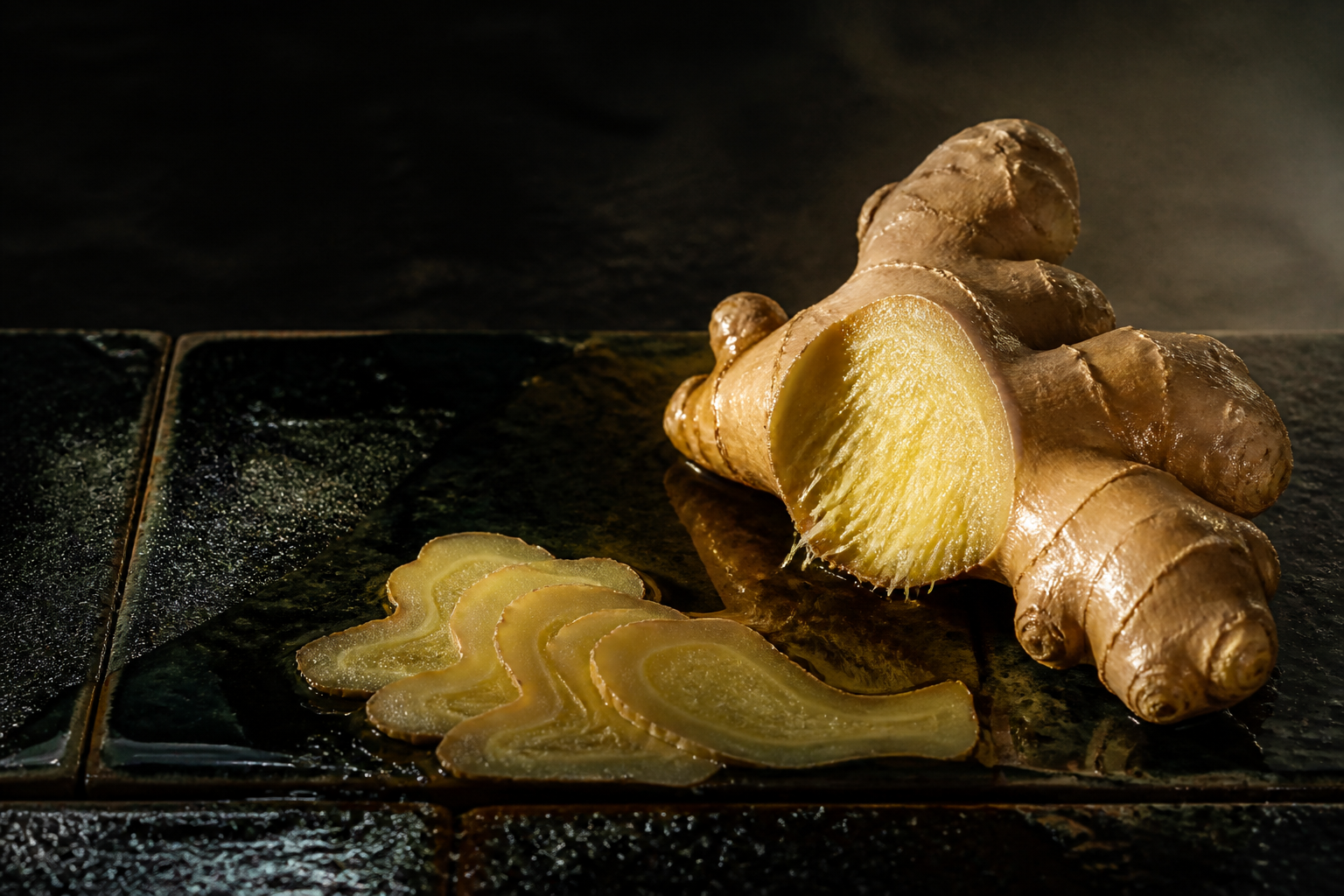
Choose the right version
- Want bright, juicy aroma? Choose fresh ginger.
- Want a steep you can strain cleanly? Choose dried cut ginger or slices.
- Want a uniform flavor in baking or a dry blend? Choose ground ginger.
A technique, not a fixed rule
Use these as a first, adjustable pass. Leaf size, cut, freshness, equipment, and the person’s preferred intensity all change the useful result.
Prepare and adjust
- For a fresh infusion: slice or bruise fresh ginger so water can reach the cut surfaces.
- For a dry spice blend: whisk ground ginger with the other powdered spices before adding.
- For a soup or braise: add sliced or cut ginger early, then strain or remove larger pieces if a clean finish matters.
Beyond the cup
Ginger-citrus steep
combine sliced ginger and citrus peel in hot water, cover, then strain.
Aromatic rice or broth
simmer sliced ginger in the liquid, then remove it before serving.
Roasted fruit
add a small amount of ground ginger with sugar and citrus to pears, peaches, or apples.
Substitutions and comparisons
- Galangal is not a one-for-one substitute; it is usually more piney and peppery.
- Fresh and ground ginger are not direct volume substitutes; choose the form for the job, then adjust by taste.
- For a clean infusion, cut ginger is usually easier to strain than powder.
Context and terminology
Kew describes ginger as an aromatic rhizome used for flavor in cooking and notes that fresh and dried forms have long been used in different culinary contexts.
When a health question brings someone here
Ginger is often sought for nausea or digestive discomfort. That search intent matters, but it does not turn fresh ginger, a culinary infusion, and a standardized supplement into the same thing.
NCCIH reports research on ginger for several types of nausea and vomiting, with most studies evaluating dietary supplements rather than foods. Do not transfer those findings to a kitchen ingredient.
Ginger has a long traditional culinary and folk-medicine history. Describe that history specifically, while keeping it separate from a personal treatment recommendation.
Supplement use can bring side effects and medication-interaction questions. A person who is pregnant, using medicines, or managing symptoms should consult a clinician or pharmacist.
Evidence and form
For a recipe, start with fresh, dried-cut, or ground ginger and the desired flavor. For a health question, state what form was studied and the limits of the evidence before offering culinary context.
Make this guide yours
Start with the task, the desired flavor, the form you have, and anything to avoid. A digital assistant can use those same choices to help you find the useful section of the guide; the guide remains complete on its own.
Useful starting questions
- What are you making or drinking?
- What form and equipment are available?
- What flavor, caffeine, or ingredient constraints matter?
See the editorial standards for how evidence and health questions are handled.
Substitutions
- Dried ground for fresh: not a like-for-like swap, and this is the substitution most often done badly. Ground ginger is warm, dusty and sweet; fresh is hot, juicy and bright. For baking and spice blends, about 1/4 tsp ground stands in for 1 tbsp grated fresh. For a stir-fry, a dressing, or anything where you would notice the juice, ground does not stand in at all — leave it out and add heat another way rather than making a gritty substitute.
- Fresh for dried: works in wet cooking — curries, braises, tea — at roughly the reverse ratio, but fresh will not carry a dry rub or a cookie dough the same way.
- Galangal: a relative, not a stand-in. Sharper, more piney and medicinal; good in Southeast Asian dishes, wrong in gingerbread.
- Nearest by effect, not identity: a little black pepper plus a pinch of allspice gives you warmth and bite in a braise when the ginger jar is empty. It will not taste of ginger, and it is worth saying so out loud rather than pretending.
- Crystallised ginger: brings sugar with it. Reduce the recipe's sugar if you are using it as the ginger source.
Storage
- Ground: six months to a year of real character. Ginger's heat fades faster than its sweetness, so old ground ginger goes flat and dusty-sweet before it goes bad-tasting — which is why people keep using it without noticing.
- Dried whole or sliced: two years or more, and worth buying if you infuse more than you bake. Crack or slice it into the pot.
- Fresh rhizome: two to three weeks loose in the refrigerator crisper (at or below 40°F/4°C); longer wrapped but not sealed, since trapped moisture is what turns it soft and grey at the cut. It also freezes well whole and grates from frozen, which is the most useful thing to know about it.
- Gone when: the ground spice smells of the container rather than of ginger, and a spoonful in hot water tastes of nothing but warm dust. Fresh ginger is finished when the flesh is fibrous and dry-looking at the cut, or soft and translucent anywhere.
Pairings
- Ingredients: garlic, scallion, soy, sesame, rice vinegar, lime, lemon, honey, molasses, brown sugar, carrot, sweet potato, winter squash, pear, rhubarb, turmeric, cumin, coriander seed, cinnamon, cardamom, clove, chili, black tea, lentils, chickpeas, chicken, pork, fish.
- Dishes: dal and lentil soup, chickpea curry, congee, a soy-and-ginger braise, carrot or squash soup, stir-fried greens, gingerbread and molasses cookies, poached pears, chai, a honey-lemon-ginger infusion, pickled ginger.
- Go carefully: raw fresh ginger contains an enzyme that keeps dairy from setting, so a gelatine or panna cotta with raw ginger can fail to firm. Simmer the ginger in the liquid first and the problem goes away.