Choose the right version
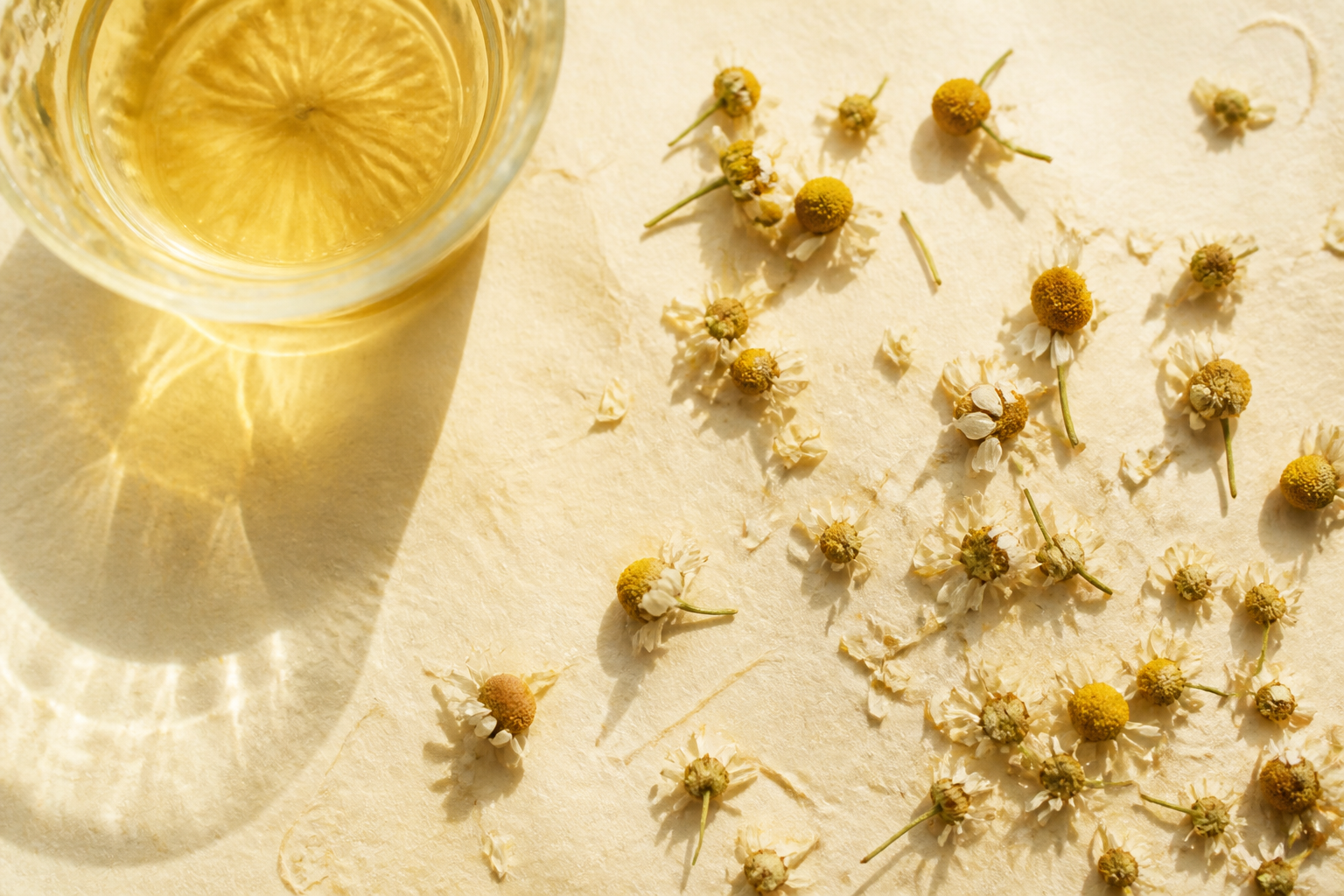
- Want a clear floral cup? Choose whole or visibly intact flowers.
- Want an easy blend? Check whether chamomile is the lead ingredient or one note among mint, citrus, or spices.
- Want culinary use? Choose a food-intended ingredient and strain it well after infusing.
A technique, not a fixed rule
Use these as a first, adjustable pass. Leaf size, cut, freshness, equipment, and the person’s preferred intensity all change the useful result.
Prepare and adjust
- For an infusion: use covered hot water, then strain the flowers before serving.
- For a syrup: steep dried flowers in hot simple syrup off the heat, then strain through a fine filter.
- For cream: warm cream gently with chamomile, let it infuse, strain, cool promptly, refrigerate at or below 40°F (4°C), and use within a day or two.
Beyond the cup
Chamomile syrup
use in sparkling water, fruit salad, or a non-alcoholic drink.
Chamomile cream
fold into custard, whipped cream, or a dessert sauce after the infused cream has been chilled.
Chamomile-poached fruit
add a strained infusion to pears, stone fruit, or apples.
Substitutions and comparisons
- Lavender is more resinous and can dominate sooner; it is not a direct swap.
- Lemon balm can offer a softer herbal-citrus direction when floral is not the goal.
- For a blend, use chamomile as the base and add a small amount of another botanical rather than treating every flower as equal.
Context and terminology
Chamomile is a botanical infusion, not tea made from Camellia sinensis. Kew recognizes Matricaria chamomilla as an accepted botanical name, while commercial naming can be broader.
When a health question brings someone here
Many people look for chamomile when they are thinking about sleep, stress, or digestion. Those are understandable search terms, but a traditional use or a familiar evening ritual is not proof that one infusion treats a condition.
Evidence: insufficient, and what exists is negative. NCCIH says there is very little information on chamomile’s effect on insomnia, and that a 2019 review of chamomile use found one study on insomnia, which found no benefit from its use for that sleep disorder. A study that looked and found nothing is not the same as an open question, and we are not going to report it as one.
Chamomile is commonly promoted for digestive concerns, but NCCIH says reliable evidence for clinical usefulness across specific conditions is insufficient.
Food and tea use is different from medicinal products. Note ragweed-family allergy concerns and medicine-interaction questions; refer personal decisions to a clinician or pharmacist.
Evidence and traditional context
We can name chamomile’s long cultural history and explain what research has or has not shown. We do not present the guide as treatment advice or imply that a blend is a remedy.
Make this guide yours
Start with the task, the desired flavor, the form you have, and anything to avoid. A digital assistant can use those same choices to help you find the useful section of the guide; the guide remains complete on its own.
Useful starting questions
- What are you making or drinking?
- What form and equipment are available?
- What flavor, caffeine, or ingredient constraints matter?
See the editorial standards for how evidence and health questions are handled.
Substitutions
- German and Roman chamomile are different plants with different flavours: German chamomile is the usual tea — sweet, apple-like, honeyed. Roman chamomile is more bitter and herbaceous. Check which you are buying, because a bitter cup is often a species question rather than a brewing mistake.
- Whole flower heads for cut-and-sifted or bagged: whole heads are the better buy and easier to judge by eye. About 2 to 3 g per 200 ml either way, but cut chamomile and bagged dust brew faster and more bitterly, so shorten the steep.
- Nearest substitutes: linden (lime flower) for the soft honeyed quality, lemon balm for a gentler herbal cup, a mild rooibos for body. None tastes like chamomile, and the apple-and-hay note is specific.
- In blends: chamomile is usually the base, and it substitutes poorly for anything with structure. It will disappear under hibiscus or peppermint.
- Caffeine: chamomile is not from the tea plant and contains no caffeine, which is why it is commonly drunk in the evening. That is a compositional fact, not a claim about what it does.
Storage
- Whole flowers: about a year at full aroma, and up to two while still pleasant. Chamomile's character is in fragile volatile oils and it fades faster than most of the herb shelf.
- Cut, powdered or bagged: six months to a year. More surface, faster loss, and bagged chamomile is often the dust left over from grading whole flowers.
- What degrades it: light first, then air. Chamomile bleaches visibly — bright yellow-and-white flower heads are fresh; pale straw-coloured ones are old. This is one of the few infusions you can honestly judge by colour.
- Container and place: an opaque airtight tin in a cupboard. Chamomile is bulky and tempting to leave in a bag, and the bag is the problem.
- Gone when: the dry flowers smell of hay rather than apple and honey, and the cup is thin, faintly bitter and mostly hot water. Chamomile that has picked up damp smells musty — discard it.
Pairings
- Ingredients and blending partners: honey, lemon and lemon peel, apple, pear, peach, vanilla, lavender (a very small amount), lemon balm, mint, rooibos, linden, rose, fennel seed, ginger, milk (less usual, but it works with honey).
- Foods: shortbread and butter biscuits, apple and pear desserts, honey cake, custard, almond pastries, fresh cheeses, oatmeal. Chamomile is also good used as a liquid — a chamomile-poached pear, or chamomile steeped into cream for a custard, is a better use of it than most people realise.
- Brewing note: 2 to 3 g per 200 ml at a full boil, covered, for four to five minutes. Cover the cup. Chamomile's aroma leaves in the steam, and an uncovered mug loses most of what you paid for.
- Go carefully: over-steeping chamomile makes it bitter rather than stronger. And pair lavender with it sparingly — a pinch too much and the cup tastes like soap.