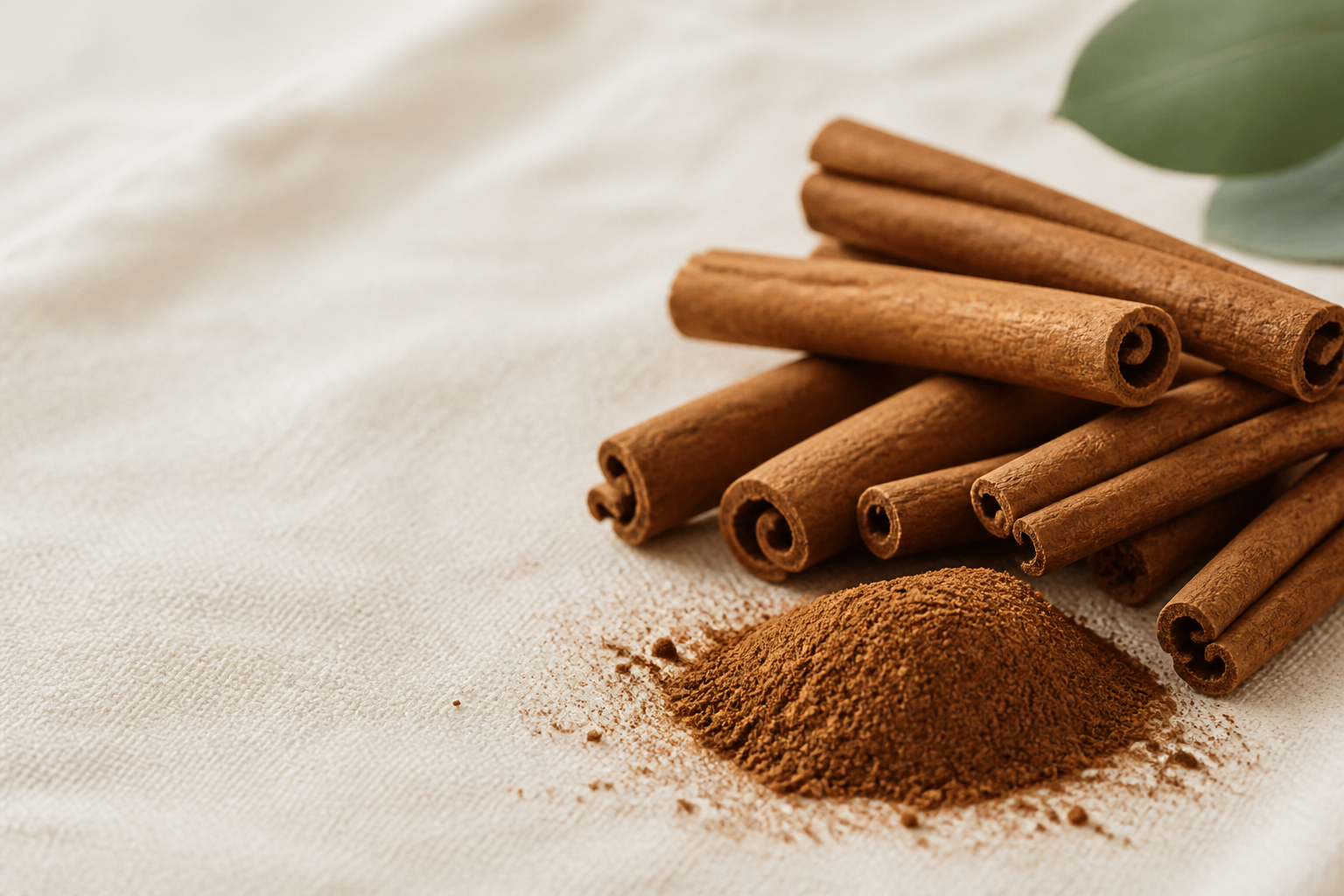
What cinnamon is
Cinnamon is the dried bark of trees in the Cinnamomum genus. As the bark dries, it curls into quills—what most of us call cinnamon sticks—or is milled into the familiar ground spice. In U.S. food guidance, “cinnamon” can include Ceylon cinnamon, Chinese cassia, and Saigon cinnamon.
Plain-language buying tip
“Cinnamon” is often used as a broad category. When the specific type matters to you, look for the species or origin on the label instead of assuming every jar tastes the same.
The two labels you’ll see most
Ceylon
Often called “true cinnamon.” Its quills are thinner and more layered, and its flavor is delicate, lightly sweet, and floral-citrusy.
Cassia
A broad market term that commonly includes Chinese, Indonesian, and Saigon types. It is usually bolder, darker, and more direct in baking and spice blends.
How it tastes
Think warmth before heat: sweet wood, gentle pepperiness, and a familiar bakery aroma. Cassia tends to read deeper and more assertive. Ceylon tends to feel lighter and more nuanced. In a blend, cinnamon can round out sharp ginger, citrus peel, clove, and black tea.
How to use it
Ground cinnamon distributes quickly in batters, oatmeal, granola, fruit, curries, and spice rubs. Add it early in baked goods; in wet savory dishes, bloom it briefly in fat with other whole or ground spices.
Cinnamon sticks work best where you want slow, clean extraction: chai, mulled drinks, rice, poaching liquid, braises, and syrup. Remove the stick before serving.
Storage
Keep cinnamon tightly closed in a cool, dry cupboard away from direct heat and sunlight. Whole sticks hold their character longer than ground cinnamon. When the aroma fades, the spice is still food-safe if properly stored, but it will contribute less flavor.
Our editorial boundary
This is culinary information, not health advice. We describe ingredients by flavor, form, sourcing, and kitchen use—not by supplement-style claims.